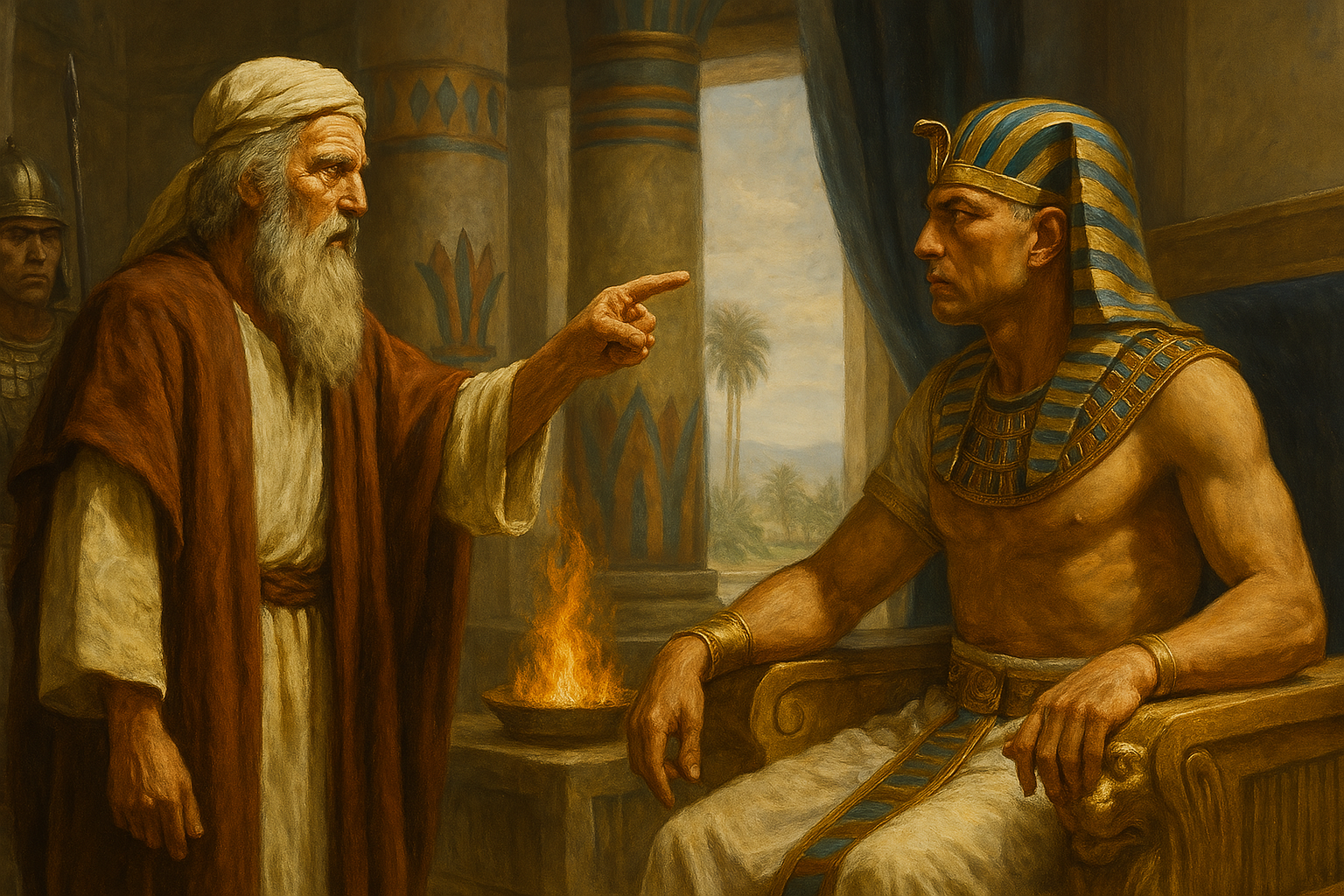
“Let my people go,” Moses said, and from there, everything played out based on Pharaoh’s response to this demand.
“Who is the Lord, that I should obey His voice and let Israel go?” Pharaoh replied. And due to his stubbornness, he and his people have to endure plague after plague after plague.
Was Pharaoh at fault?
Can we actually blame Pharaoh for his response, though? Did Pharaoh actually have a choice in the matter? The question arises because of something God says as He’s sending Moses on this quest of liberation.
Exodus 4:21 – “When you go back to Egypt, see that you do before Pharaoh all the miracles that I have put in your power. But I will harden his heart, so that he will not let the people go.”
God takes credit for hardening Pharaoh’s heart, which seems to imply that Pharaoh didn’t have a free choice to decide whether to submit to God. Was God essentially controlling Pharaoh’s actions throughout this story?
But wait then later after Moses takes the plague of frogs away, it says this.
Exodus 8:15 – But when Pharaoh saw that there was a respite, he hardened his heart and would not listen to them, as the Lord had said.
So now the Bible tells us that Pharaoh is hardening his own heart. However, right after that is the plague of gnats, and that account ends with these words:
Exodus 8:19 – But Pharaoh’s heart was hardened, and he would not listen to them…
So now the heart-hardening is something that happened to Pharaoh. However, after the plague of flies later, it says:
Exodus 8:32 – But Pharaoh hardened his heart this time also, and did not let the people go.
So now we can go back to blaming Pharaoh, which is easier. But if you continue to read the full story from Exodus 4-14, you’ll see that the attribution for the hardening of Pharaoh’s heart bounces back and forth.

So by this point, Pharaoh’s heart is harder than remembering the logins to all of those streaming services you’re subscribed to. Meanwhile, your brain is probably feeling more like jelly from all of this spinning around. What was the ultimate cause of Pharaoh’s hard heart- God’s sovereignty? Pharaoh’s pride and choice?
Do we have free will?
The answer is: a bit of both. Yes, God hardened Pharaoh’s heart in this story because God was using him for a purpose. God was doing something with the story of the ten plagues and the crossing of the Red Sea that brought more glory to God than if Pharaoh had just said yes after the Nile turned to blood.
Looking at it from a New Testament lens, we can see how Egypt typified the world, Pharaoh typified the devil, slavery typified being enslaved to our sins, and the Passover lamb typified Jesus. These allusions become clear. God was presenting the story of salvation to us through this historical narrative more than a thousand years before Jesus ever came to this planet and died for our sins.
But also, God only hardened Pharaoh’s heart because that’s also what Pharaoh wanted. He did not desire to let the people go. He did not want to submit to God. Pharaoh did not want to give up control. And as the plagues dragged on, Pharaoh’s pride grew, and he did not want to be beaten.
So perhaps God hardened Pharaoh’s heart, but it was also giving Pharaoh what he wanted. And part of God’s abandonment wrath in the Bible is that He gives us exactly what we want. He abandons us to our own desires.
What is God’s abandonment wrath?
Romans 1:18, 24, 26, 28 – 18 For the wrath of God is revealed from heaven against all ungodliness and unrighteousness of men, who by their unrighteousness suppress the truth...
24 Therefore God gave them up in the lusts of their hearts to impurity, to the dishonoring of their bodies among themselves…
26 For this reason God gave them up to dishonorable passions…
28 And since they did not see fit to acknowledge God, God gave them up to a debased mind to do what ought not to be done.
As we see in Romans, part of God’s wrath is that He will “give up” or hand us over to our own ungodly desires when we reject Him. From Pharaoh’s perspective, continuing to war against a God who can turn the Nile to blood and cover the land with gnats and frogs and locusts is the most illogical thing one could do. And that’s an evidence of God’s abandonment wrath: when someone’s actions fly in the face of all logic.
II Thessalonians 2:11-12 – 11 Therefore God sends them a strong delusion, so that they may believe what is false, 12 in order that all may be condemned who did not believe the truth but had pleasure in unrighteousness.
Note again that God is the one sending the delusion here, but only because these people desired wickedness.
Psalm 81:11-12 – 11 “But my people did not listen to my voice;
Israel would not submit to me.
12 So I gave them over to their stubborn hearts,
to follow their own counsels.
God is in control, but He will not force Himself on anyone. In fact, if someone wants to reject God, He will even help them to believe any alternative delusion they prefer.
Pharaoh is not a special case. He is an example of what happens every day when people choose to rebel against God.
If you’d like a more in-depth exploration of the Pharaoh story and God’s abandonment wrath, listen to this episode: