

Every so often, someone asks a question that makes Christians a little uncomfortable:
“Is it okay to read the Book of Enoch?”
Or worse:
“Why does the Bible quote a book that isn’t in the Bible?”
That second question is where things get interesting.
Because the short answer is this: the Book of Jude directly quotes the Book of Enoch. And once you reckon with that fact, there are a number of ramifications that follow.
So let’s talk about why you can read the Book of Enoch, why it’s legitimate (even if it’s not Scripture), and why understanding it can actually help you know your Bible better.
Jude Quoted the Book of Enoch (That’s Not Up for Debate)
Here’s the passage that causes all the trouble:
Jude 14-15 – It was also about these that Enoch, the seventh from Adam, prophesied, saying, ‘Behold, the Lord comes with ten thousands of his holy ones, to execute judgment on all…’
That prophecy does not appear anywhere in the Old Testament.
It appears in 1 Enoch 1:9.
So we need to slow down and make a few careful observations.
First, Jude does not say, “Scripture says…” He’s not calling Enoch canonical Scripture. He’s calling it a prophecy.
Second, Jude is very specific about which Enoch he means:
“Enoch, the seventh from Adam.”
That places him squarely in Genesis 5- pre-flood Enoch. Not some random later figure with the same name.
Third, if Jude includes this prophecy in a Spirit-inspired letter, then the prophecy itself must be true. God does not inspire lies.
That does not mean every word of the Book of Enoch is true.
But it does mean this prophecy in the Book of Enoch is.
Why You Can Read the Book of Enoch: Three Biblical Reasons
If you’re asking why you can read the Book of Enoch without compromising your faith, here are three solid, biblical reasons.
1. Jude Quotes It Directly
This alone should settle the question of legitimacy. Jude believed this prophecy came from Enoch. He believed it was preserved accurately enough to be read by the church. And he believed it was relevant for understanding apostasy and judgment in the last days.
That makes the Book of Enoch historically and theologically valuable.
2. Peter References Its Theology
Peter never quotes Enoch outright- but he clearly assumes its history.
II Peter 2:4 – God did not spare angels when they sinned, but cast them into hell and committed them to chains of gloomy darkness…
Here’s the problem for those who reject the Book of Enoch: The Old Testament never tells us angels were chained in darkness.
But the Book of Enoch does (repeatedly).
Peter even uses the Greek word Tartarus, a term that appears nowhere else in Scripture- and happens to be the same term used in Enoch for the prison of the Watchers.
Peter is drawing from Enochic theology because it was the accepted historical backdrop of his time.
(by the way, if you’d like to listen to a podcast episode about who these angels were and why they were chained away, listen to the Weird Stuff in the Bible podcast episodes 5 [click here], 6 [click here], 7 [click here] and 8 [click here])
3. Jesus Treated It Like History
This is the one that surprises people.
Jesus taught things that do not appear anywhere in the Old Testament, but do appear in the Book of Enoch.
For example, Jesus says uses the phrase “the eternal fire prepared for the devil and his angels” in Matthew 25:41.
Where does the Old Testament say hell was created for fallen angels?
It doesn’t.
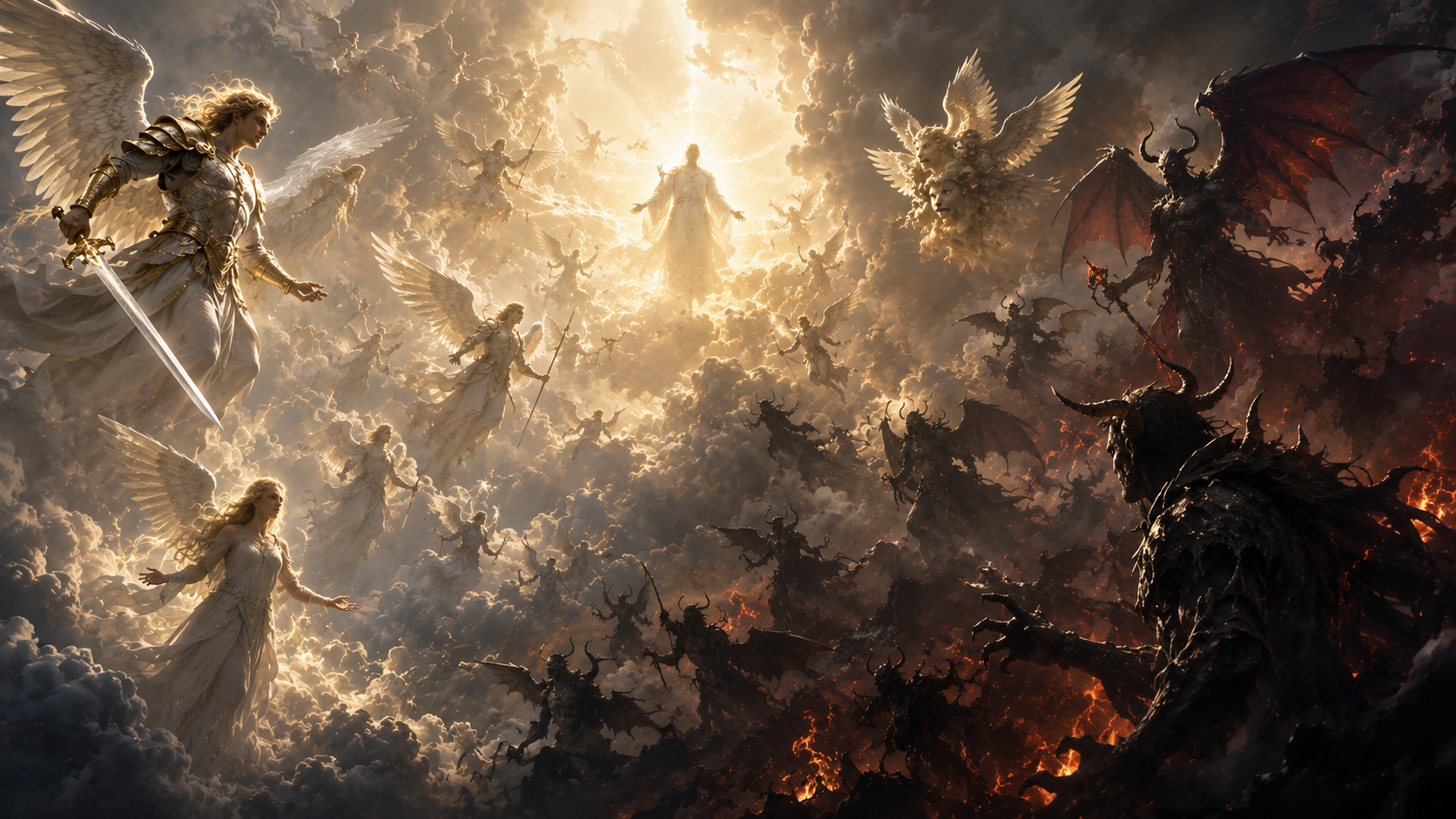
But 1 Enoch 10 does.
Enoch explains that the abyss of fire was prepared as punishment for the Watchers, and that condemned humans would later share that fate.
Jesus isn’t inventing new theology here; He’s referencing an established one.
Which tells us something important: Jesus read the Book of Enoch as reliable information.
So Why Isn’t the Book of Enoch in the Bible?
This is where balance matters.
The Book of Enoch is legitimate, but it is not canonical– and it shouldn’t be. Here’s why:
1. Preservation Matters
Jesus said God would preserve His Word perfectly:
Matthew 5:18 – Not one jot or tittle will pass from the Law…
Scripture has been preserved with astonishing accuracy, but the Book of Enoch has not.
It has gaps. Missing lines. Variant versions. Even at least one obvious numerical error (such as giants who are thousands of feet tall- clearly a scribal issue).
That alone disqualifies it from being Scripture.
2. Authorship Is Complicated
Large portions of Enoch show signs of Second Temple–era writing, not antediluvian authorship.
Examples include named angels, the term “Watchers,” and the literary style.
Jude affirms that one prophecy came from Enoch himself.
That does not mean Enoch personally wrote every chapter attributed to him.
This tends to have scholars place the book in the category of pseudepigrapha– important, ancient writings associated with biblical figures but not authored entirely by them.
3. Even Enoch Points Beyond Itself
In one of its later chapters, the Book of Enoch speaks of future books that would guide the righteous (1 Enoch 104:12-13)..
Books that sound an awful lot like… Scripture.
In other words, even Enoch acknowledges that God’s revealed Word would come later– and that those books would carry eternal authority.
Think of Enoch Like a History Book
Here’s how I think about it.
I trust the encyclopedia and find it generally reliable. But that doesn’t mean I treat it like Scripture. I recognize that it will have imperfections and maybe even the occasional mistake or incorrect fact. But again, most of the time, it can be helpful and trustworthy.
The Book of Enoch functions the same way. It gives us background, context, and shared assumptions that biblical authors expected their readers to understand.
If you ignore Enoch entirely, parts of the New Testament will feel confusing- not because Scripture is unclear, but because we’ve lost the cultural library its authors assumed.
That’s why you can read the Book of Enoch responsibly:
- Not to replace Scripture
- Not to reinterpret Scripture
- But to understand Scripture better
One Last Objection: “Other Cultures Have Similar Stories”
They do.
Mesopotamia had the Apkallu.
Other cultures had divine beings, giants, and flood stories.
But that doesn’t disprove Enoch- it actually supports it.
If the flood really happened…
If humanity really descends from the same survivors…
If angelic beings actually did descend to the earth before (and essentially necessitate) that flood…
Then of course those stories would echo across cultures.
The Bible doesn’t exist alongside ancient myths. It stands above them as the most accurate record of shared human history. And I would say the same of the Book of Enoch in its expansion of information about the antediluvian world.
So… Why Can You Read the Book of Enoch?
Because:
- Jude quoted it
- Peter assumed it
- Jesus referenced it
- The early church respected it
- And it helps explain parts of Scripture that otherwise feel incomplete
You don’t need to fear it.
You don’t need to canonize it.
You just need to read it wisely.
And when you do, you may find that your Bible suddenly makes a whole lot more sense.
If you’d like to join our 2026 podcast journey through Enoch 1-36 and all the ways it intersects with the Bible, you can start listening right here:



Leave a Reply