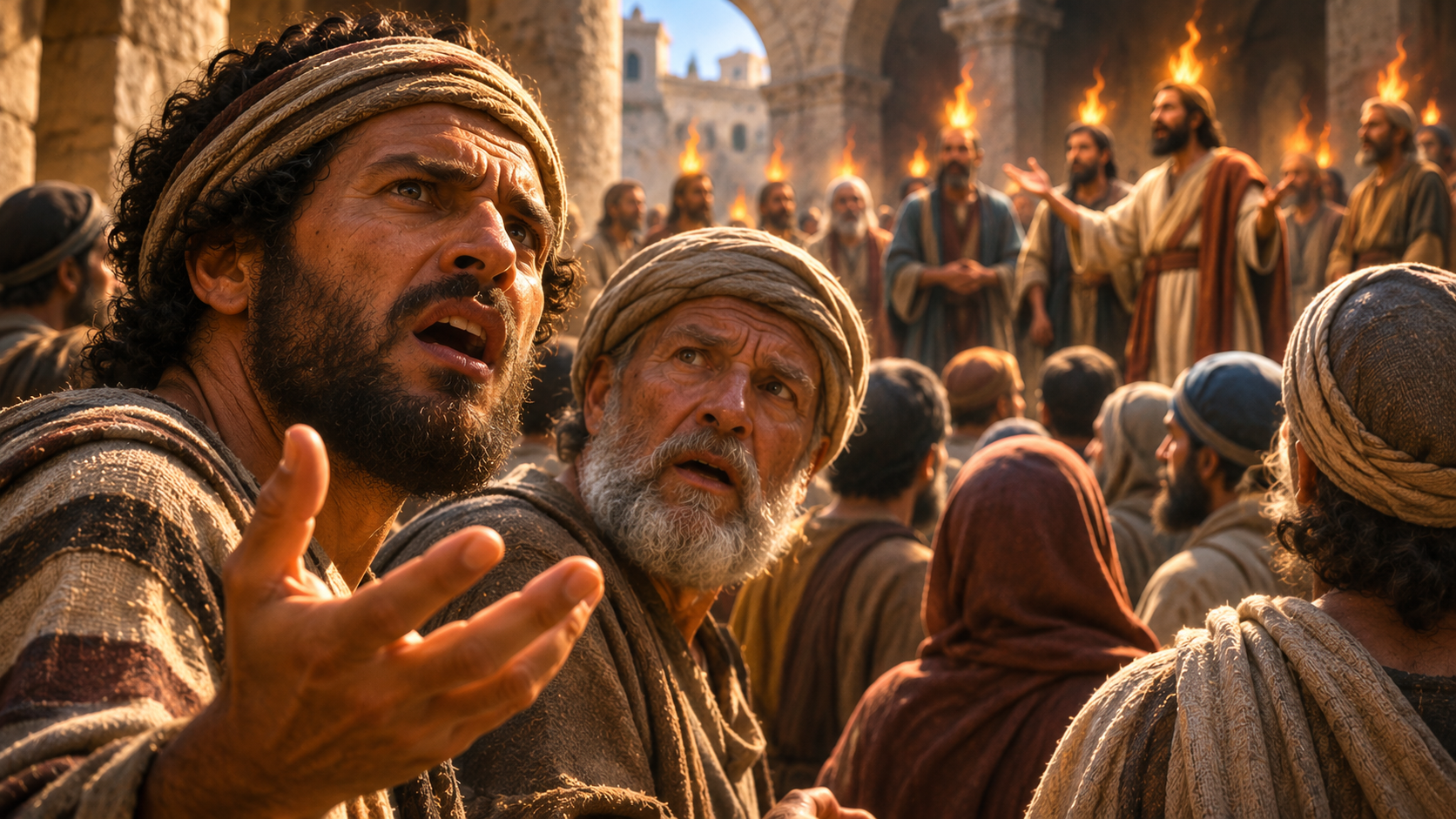
What connects the tongues of fire in Acts 2 with Mount Sinai and the Tower of Babel? Pentecost typology explores how the coming of the Holy Spirit echoes earlier biblical events—and brings their themes forward in surprising ways.
If you’re not familiar with typology, here is a definition from James Hamilton, Jr.’s book on the subject: “Typology is the God-ordained, author-intended historical correspondence between people, events, and institutions across the Bible’s redemptive-historical story (i.e., in covenantal context).” (from Typology: Understanding the Bible’s Promise-Shaped Patterns, page 26).
We see multiple typological patterns in the Pentecost narrative. At Sinai, God descended in fire and established His covenant with Israel. At Pentecost, tongues as of fire rested on believers as the Holy Spirit empowered the church. At Babel, language became a barrier that scattered humanity. At Pentecost, people from many nations heard God’s mighty works in their own languages.
This infographic compares the parallels between Sinai and Pentecost and the contrasts between Babel and Pentecost. The Scripture references make it easy to study each connection for yourself.
Infographic

Sinai and Pentecost: God Establishes His People
Israel’s encounter with God at Mount Sinai followed deliverance from slavery in Egypt. Pentecost followed Jesus’ death and resurrection, through which He accomplished deliverance from sin.
Both accounts feature fire associated with God’s presence. At Sinai, the Lord descended on the mountain in fire (Exodus 19:18). At Pentecost, tongues as of fire rested on each believer, and they were filled with the Holy Spirit (Acts 2:3–4). The presence that the people approached cautiously at Sinai now rested personally on Jesus’ followers.
Another striking contrast involves the number 3,000. After the golden calf rebellion, about 3,000 people died (Exodus 32:28). Following Peter’s Pentecost sermon, about 3,000 received his message and were baptized (Acts 2:41).
The timing also invites comparison. Israel reached Sinai in the third month after leaving Egypt (Exodus 19:1), and Jewish tradition associates the giving of the Torah with the Feast of Weeks, or Pentecost.
Babel and Pentecost: Understanding Across Languages
At the Tower of Babel, humanity united to build a city and make a name for themselves. God confused their language and scattered them across the earth (Genesis 11:1–9).
At Pentecost, people from many nations gathered in Jerusalem and heard believers declaring God’s mighty works in their own languages (Acts 2:5–11). Language, which had become a barrier at Babel, here became a means of communicating God’s works.
There is even an ironic contrast in the crowds’ confusion. At Babel, people could no longer understand one another. At Pentecost, the crowd was bewildered precisely because they could understand the diverse speakers.
In that sense, Pentecost fixed what Babel broke. It did not eliminate different languages or national identities. It demonstrated that those differences would not prevent the good news of Jesus from reaching the nations.
For more information about these connections, check out Michael Heiser’s The Unseen Realm: Discovering the Supernatural World of the Bible (Expanded Edition, especially chapter 34. Heiser notes: “The key idea to grasp is that the ‘Table of Nations’ in Genesis represents the known world at the time it was written…In terms of geographical coverage, the reach of the gospel chronicled in the book of Acts constituties an east-to-west sweep through the known world.”
What Does Pentecost Typology Teach Us?
These parallels help us see Acts 2 within the larger story of Scripture. The God who established His covenant with Israel at Sinai poured out His Spirit on Jesus’ followers at Pentecost. The nations scattered away from God in Genesis 11 are invited back through the message of the Gospel.
The Kingdom of God is for everybody, everywhere. Many languages can proclaim the same Lord.
For a deeper look at these connections, listen to this episode of the Weird Stuff in the Bible podcast: