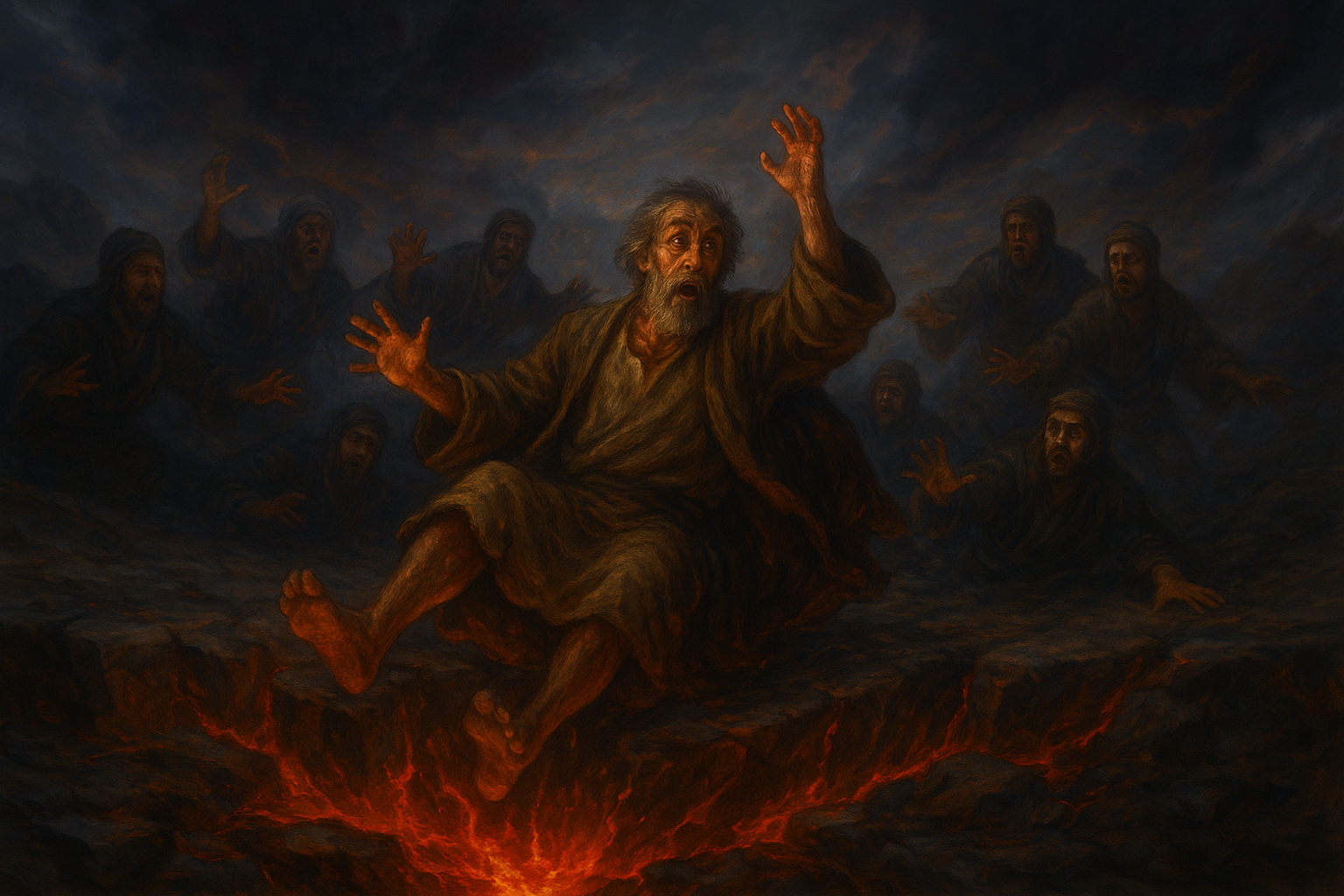
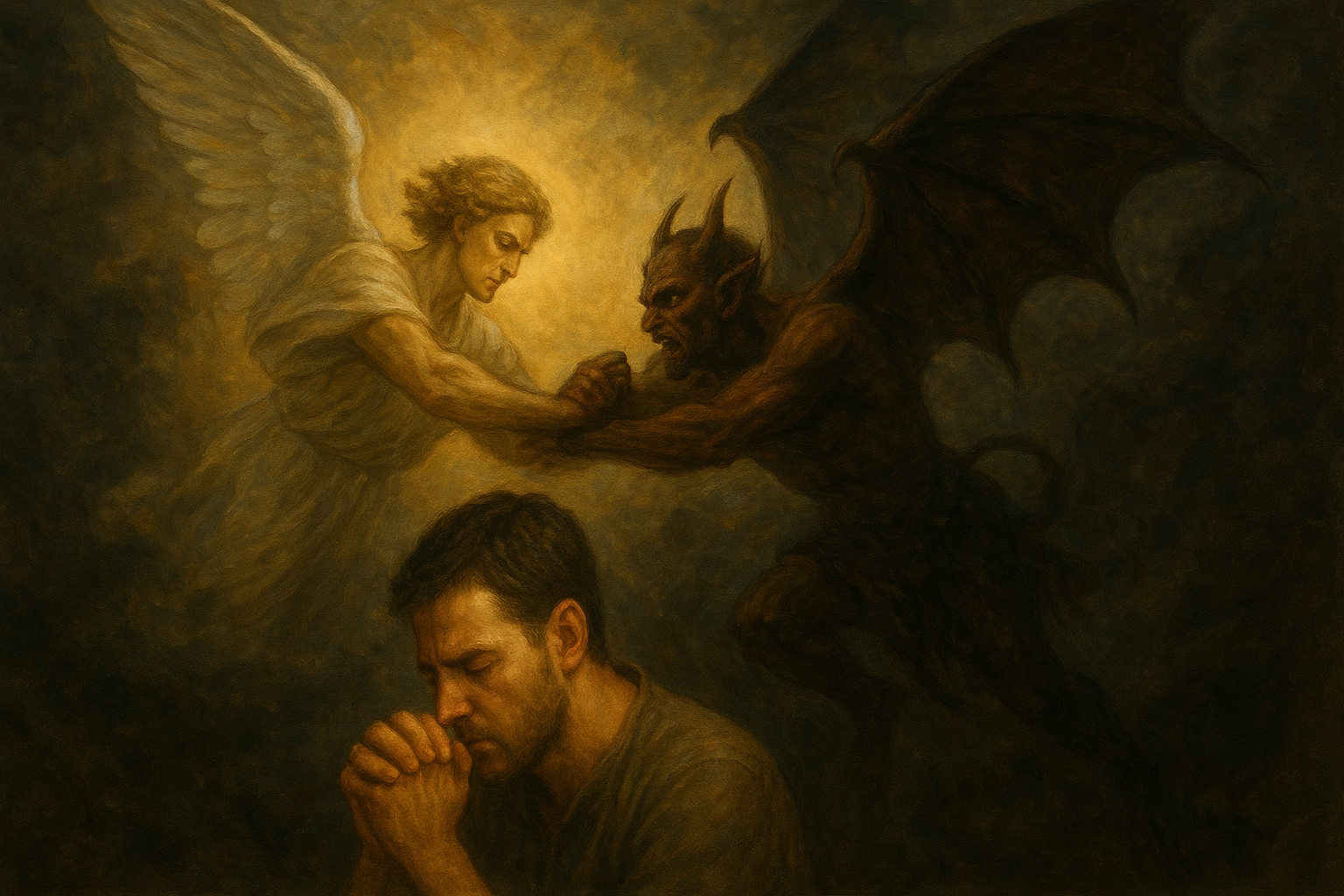
Jude quotes a prophecy that’s found nowhere in your Bible.
Jude 14-16 (ESV) – It was also about these that Enoch, the seventh from Adam, prophesied, saying, “Behold, the Lord comes with ten thousands of his holy ones, to execute judgment on all and to convict all the ungodly of all their deeds of ungodliness that they have committed in such an ungodly way, and of all the harsh things that ungodly sinners have spoken against him.” These are grumblers, malcontents, following their own sinful desires; they are loud-mouthed boasters, showing favoritism to gain advantage.
What’s weird about this prophecy is that it’s not found anywhere in the Old Testament.
Enoch is. Enoch shows up only briefly in Genesis 5 prior to the flood. He followed God closely and was actually taken to heaven without dying. Jude quotes a prophecy he gave. But this prophecy is recorded nowhere in the Old Testament.
If Enoch’s book is not from the Bible, is it a legitimate prophecy?
If it’s not from a canonical book, does that make it an illegitimate prophecy? It must be true, because Jude is verifying its veracity by quoting it- and Jude is a canonical book.
Are we sure it actually came from Enoch? If we accept that the Bible is true, then yes, these words must have originated from Enoch as he was inspired by the Holy Spirit (Hebrews 1:1, II Peter 1:21), as that is what Jude tells us here.

Could Jude have been talking about another Enoch?
No. There is another Enoch in Genesis 4 (a son of Cain), but Jude specifies that this prophecy came from the Enoch who was “seventh from Adam.” If you follow the genealogy of Genesis 5, it’s clear that Jude is talking about the Genesis 5 Enoch.
But where was Enoch’s prophecy written if not in the Bible? It comes from an ancient text outside the Biblical canon called the Book of Enoch.
The Book of Enoch and the Pseudepigrapha
The Pseudepigrapha is a word that refers to ancient books that are forgeries. A pseudepigraphical book is considered by historians to be written by someone other than the person who claimed it was. Other ancient books in this category include Jubilees, the Psalms of Solomon, the Life of Adam and Eve, and the Testament of Job.
When it comes to the book of Enoch, some of it may be genuinely from Enoch himself, but not all of it. It’s debatable how much of it is genuine and how much of it is not.
However, the fact that Jude quotes from Enoch means, at a bare minimum, the words that Jude quotes are genuinely from Enoch. But again, that doesn’t mean the entire book is.
The Book of Enoch is not a part of the Apocrypha. The Apocrypha are historical books that have less mysterious origins. The Pseudepigrapha are more of a mixed bag; their authorship is in question, and their claims are more far-fetched. It’s hard to know what to believe in those books.
Though we can’t be sure that everything in the Book of Enoch was legitimately written by Enoch himself, the claims of the book fill in some gaps in our understanding of the pre-flood world and the sins of the “fallen angels.”
What is interesting about the Book of Enoch compared to most of the other pseudepigraphical books, however, is that the Biblical authors- and Jesus Himself- accepted the Book of Enoch as reliable history.

reliable
Adjective: consistently good in quality or performance; able to be trusted.
Noun: a person or thing with trustworthy qualities.
-The Oxford English Dictionary
Peter clearly believed in the Book of Enoch in I Peter 3 and II Peter 2. John includes allusions to the Book of Enoch in Revelation. And Jesus Himself alludes to some passages from Enoch’s book in the Gospels.
Does that mean the book of Enoch actually belongs in the Biblical canon?
No. Even Jude, in his citation above, doesn’t reference it as Scripture. Often the New Testament writers will use phrases like “it is written” or “the Scriptures say” when they refer to something from the Old Testament. But Jude doesn’t refer to Enoch’s prophetic utterance as Scripture, just a prophecy.
Jude 14 – It was also about these that Enoch, the seventh from Adam, prophesied, saying…
Is it safe to read the book of Enoch?
Many Christians cringe when they hear the term “Book of Enoch.” They believe that because it is not Scripture, we shouldn’t read it; that it will only confuse our faith, or that it is spiritually dangerous to engage with its material.
But Christians who ignore the Book of Enoch are missing some pieces of the puzzle when they come to Old Testament history. We can treat it as generally reliable without considering it the literal Word of God.
If you’d like more information about when Jesus potentially quoted from the Book of Enoch, check out this podcast episode: